Note
JL Curran State Park Pack Mule Activation
A local Pack Mule outing at US-6992 with the freshly reassembled KX2, a high 51-foot random wire, and 23 CW QSOs through heavy QSB.
Unfamiliar with some of these terms?
POTA — Parks on the Air — an amateur radio program where licensed operators make contacts from designated public lands (national parks, state parks, wildlife refuges, and similar areas). Each location has a reference number. To activate a park, you log at least 10 contacts from within its boundaries. Hunters are operators who contact activators from home.
Pack Mule — A POTA News & Reviews activator award for portable stations carried away from the vehicle by hiking, cycling, paddling, or another non-motorized approach. A qualifying activation needs at least 22 QSOs, and the full award requires 100 qualifying activations.
Contact map
N1RWJ at US-6992
JL Curran State Park - 23 QSOs - June 3, 2026
23 QSOs
JL Curran State Park, US-6992, is one of my closest parks, and I have activated it a lot. I am slowly working toward a Kilo award here; the local ledger had me at 740 QSOs from JL Curran before this activation, so this log should move that to about 763 once it is merged. This morning I turned the familiar park into a small Pack Mule outing, hiking a little over half a mile in to operate from a quiet spot in the woods.
At a glance
- Where: JL Curran State Park, US-6992, wooded operating spot off the trail
- When: June 3, 2026, about 9:25 to 11:35 AM EDT
- Activation: 23 CW QSOs; 3 on 40 meters and 20 on 20 meters
- Radio: Elecraft KX2, freshly reassembled after the USB-C charger and side rail install
- Antenna: 51-foot end-fed random wire, thrown roughly 35 to 40 feet high and running in an upside-down U shape through the trees
- Power: Mostly 5 watts; the last two QSOs were logged at 10 watts
- CW gear: Zippy Key paddle by K8CES; headphones and the KX2 speaker
Field notes
The activation started later than I wanted because the radio was still apart from the USB-C charger installation. I finished putting the KX2 back together that morning, packed it, and did not get to the park until around 8:45 AM. That made the morning feel a little compressed before I even got on the trail.
The weather was gorgeous, and I found another excellent operating spot in the woods where I could stand, move around, and not feel pinned to one position. There were boulders, a low stone wall, and enough tall trees to make the antenna worth the effort. The throw line went perfectly on the first throw, right where I wanted it. That has been a running skill to improve on recent outings, and this was one of the mornings where the practice showed up.
The 51-foot random wire went up high, maybe 35 to 40 feet, and the available supports made it run in an upside-down U shape through the trees. It was not the shape I would draw on paper, but it loaded and it got out.
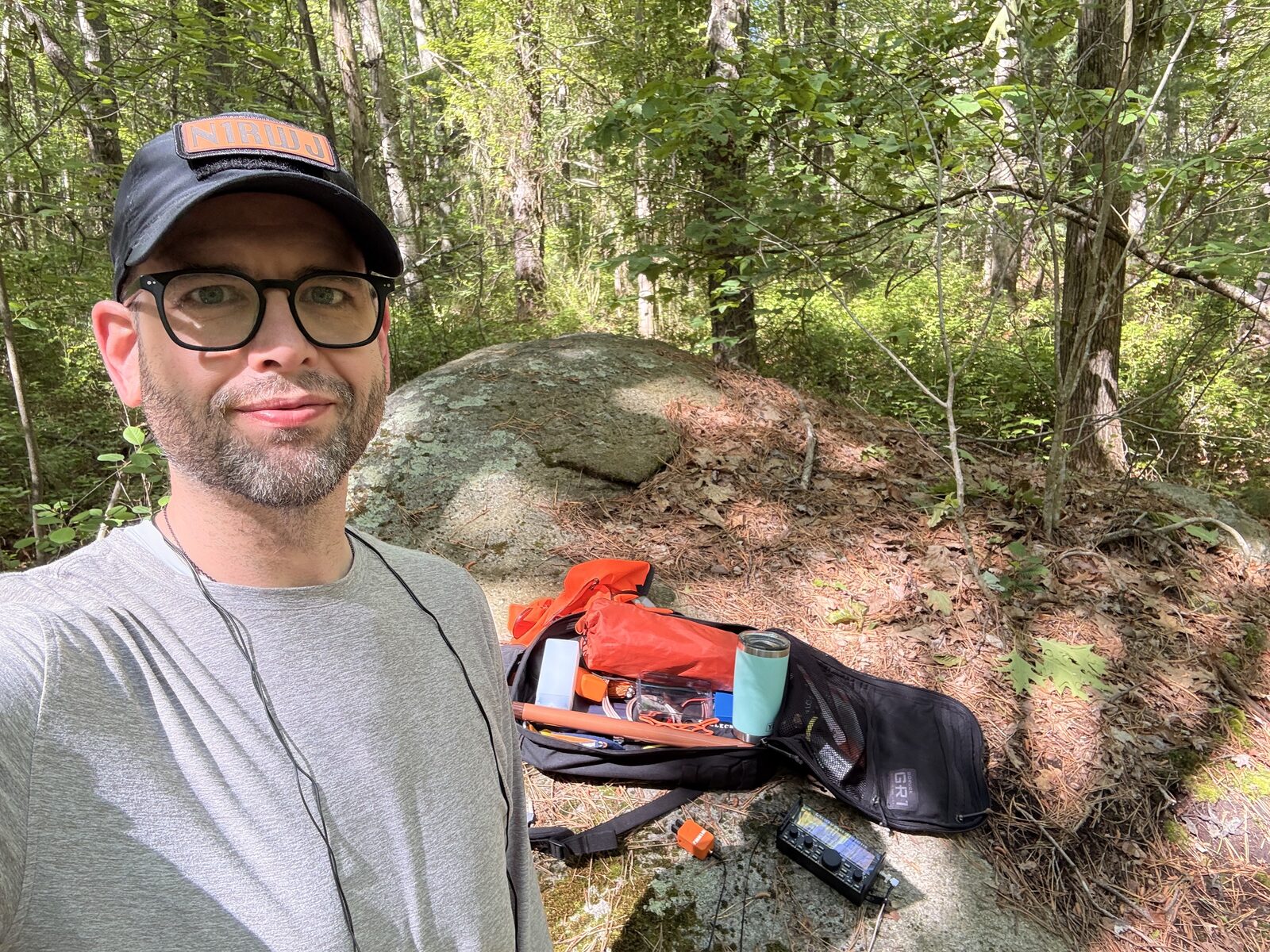
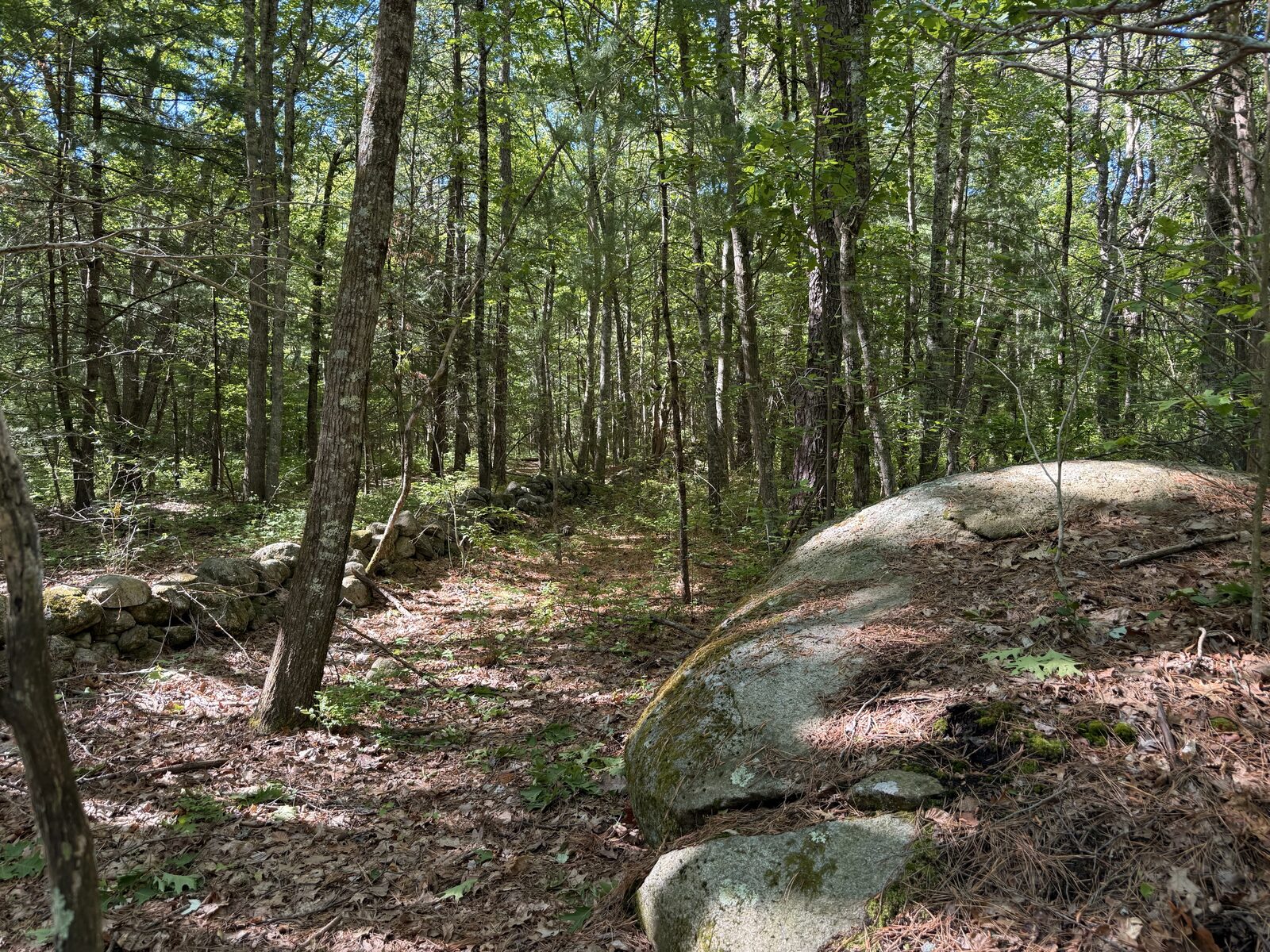
The on-air part was slower than the final log makes it look. I made the basic POTA activation fairly quickly, then spent a long stretch trying to get over the Pack Mule line. There was a lot of QSB, and the pace kept stalling enough that I moved between calling CQ, hunting around for stations that could hear me, and checking what else was active.
I used headphones when I needed to copy carefully, but for the long CQ stretches I switched to the KX2 speaker and paced around the operating spot while listening. That was one of the nicer parts of this setup: the site gave me room to stand, move, and keep the activation from feeling like sitting still and waiting. Final count was 23 CW QSOs, with 22 unique callsigns. For a familiar local park, this one took more patience than expected.
What worked
- The throw line landed exactly where I wanted it on the first try.
- The high random wire was worth the effort, even with the odd upside-down U-shaped run through the trees.
- JL Curran has enough quiet woods close to home to make a real hike-in operating spot practical.
- Using the speaker during long CQ stretches made it easy to pace around and stay comfortable.
- Staying with 20 meters eventually got the Pack Mule count, even though the pace was slow.
To adjust next time
- Finish radio work the night before a planned activation, not the morning of the activation.
- When QSB is that heavy, expect the second half of the log to take longer than the first ten contacts.
- Keep looking for a cleaner wire path at this spot; the site is good enough to revisit.