Note
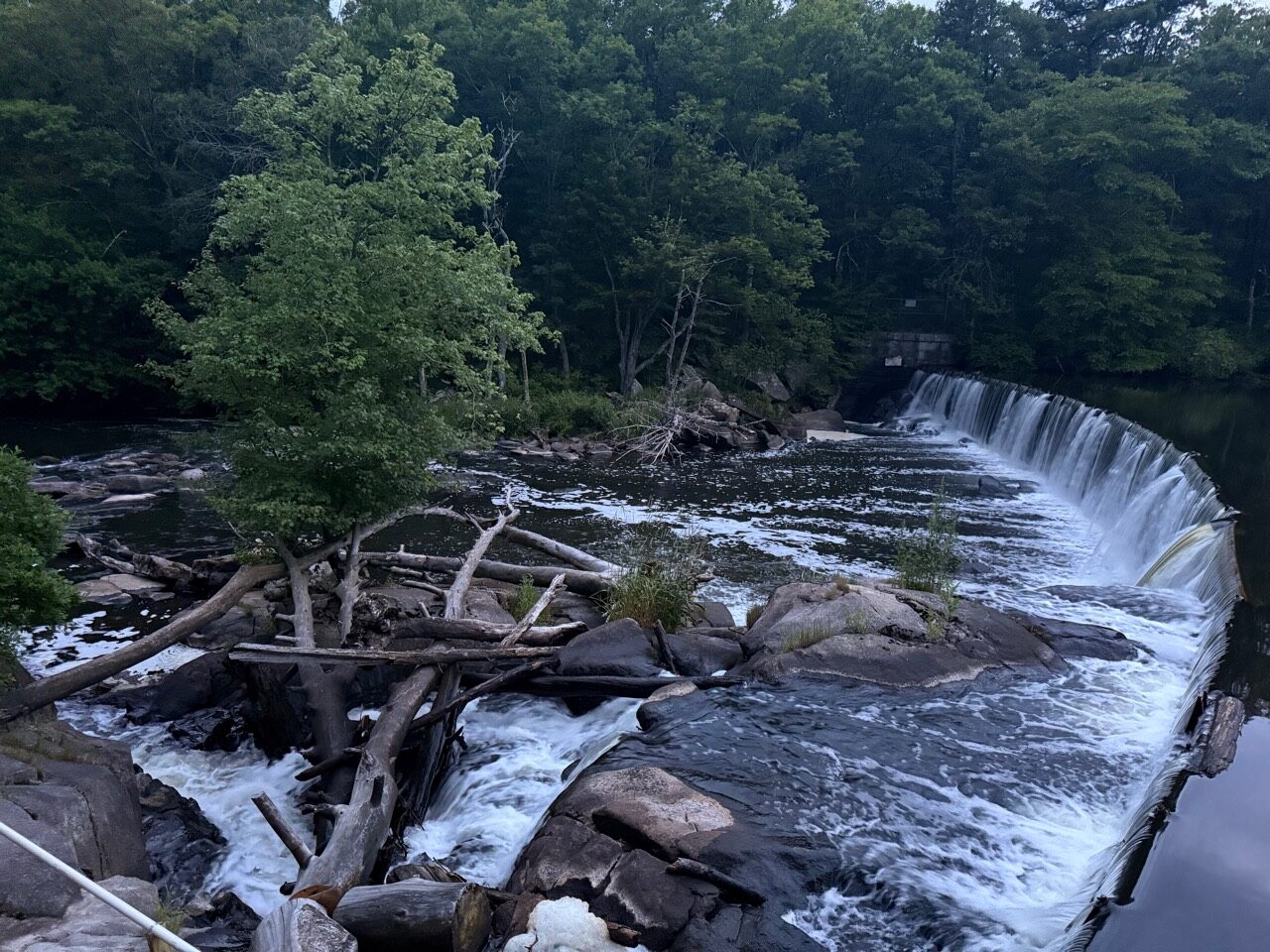
Blackstone River Valley NHP from the Rhode Island side
A Rhode Island-side activation of US-7971 with 18 CW QSOs, one Alaska contact on 10 watts, and one preventable walk back to the car for missing dipole pigtails.
New to POTA?
POTA — Parks on the Air — an amateur radio program where licensed operators make contacts from designated public lands (national parks, state parks, wildlife refuges, and similar areas). Each location has a reference number. To activate a park, you log at least 10 contacts from within its boundaries. Hunters are operators who contact activators from home.
Contact map
N1RWJ at US-7971
Blackstone River Valley National Historical Park - 18 QSOs - June 14, 2026
18 QSOs
Blackstone River Valley National Historical Park, US-7971, was the next stop in my activate-all-Rhode-Island POTA project. It is a national park reference, so the activation would have counted either way, but the main parking area I found is now on the Massachusetts side of the line. That felt a little off for this particular project. The point is not just to work every reference that touches Rhode Island; it is to activate from Rhode Island when I can.
So I parked at the main lot, packed the station, and walked the trail until I crossed back into Rhode Island. That solved the boundary problem cleanly and made the activation feel like it fit the spirit of the project.
At a glance
- Where: Blackstone River Valley National Historical Park, US-7971, operating from the Rhode Island side after walking in from the main parking area
- When: June 14, 2026, starting around 7:15 to 7:30 p.m. local
- Activation: 18 CW QSOs on 20 meters; 6 before the UTC rollover and 12 after it
- Radio: Elecraft KX2
- Antenna: KJ6ER Challenger with the off-center-fed dipole, on a tripod
- Power: 10 watts from the KX2 for 17 contacts; one contact at 5 watts
- CW gear: Zippy paddle by K8CES
Field notes
Because this was a national park, I treated it like a no-stakes site and used the tripod instead of putting a spike into the ground. That part was fine. The avoidable mistake was in the bag change before leaving: I had moved gear from one bag to another and left the short-end pigtails for the off-center-fed dipole back at the car.
I did not notice until I had the antenna most of the way set up. There was nothing clever to do about it, so I packed everything back up, ran back to the car, grabbed the missing pigtails, walked back to the operating spot, and set the station up again. It probably only added eight or ten minutes, but it was exactly the kind of small packing miss that feels silly in the field because the rest of the setup was ready to go.
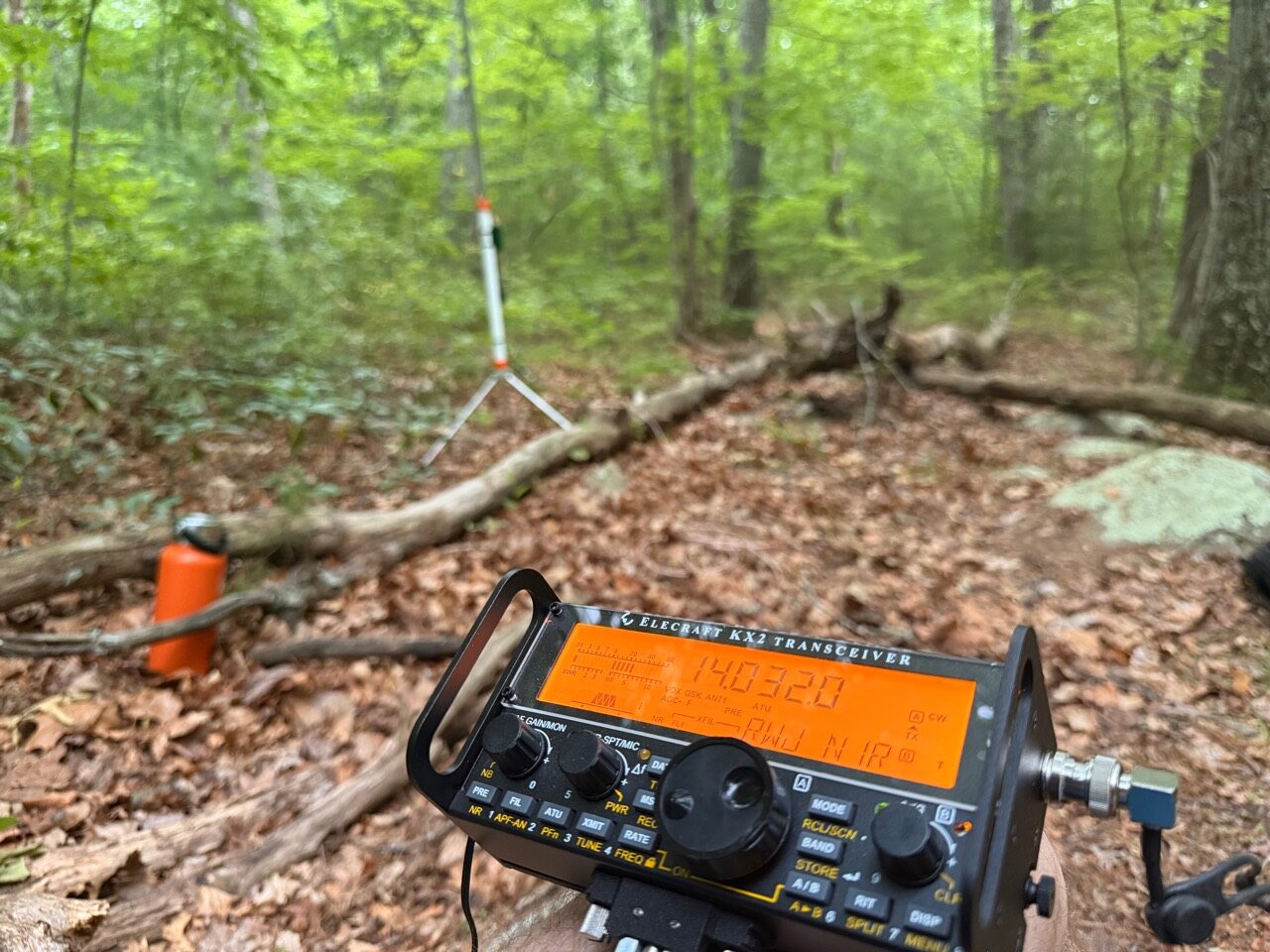
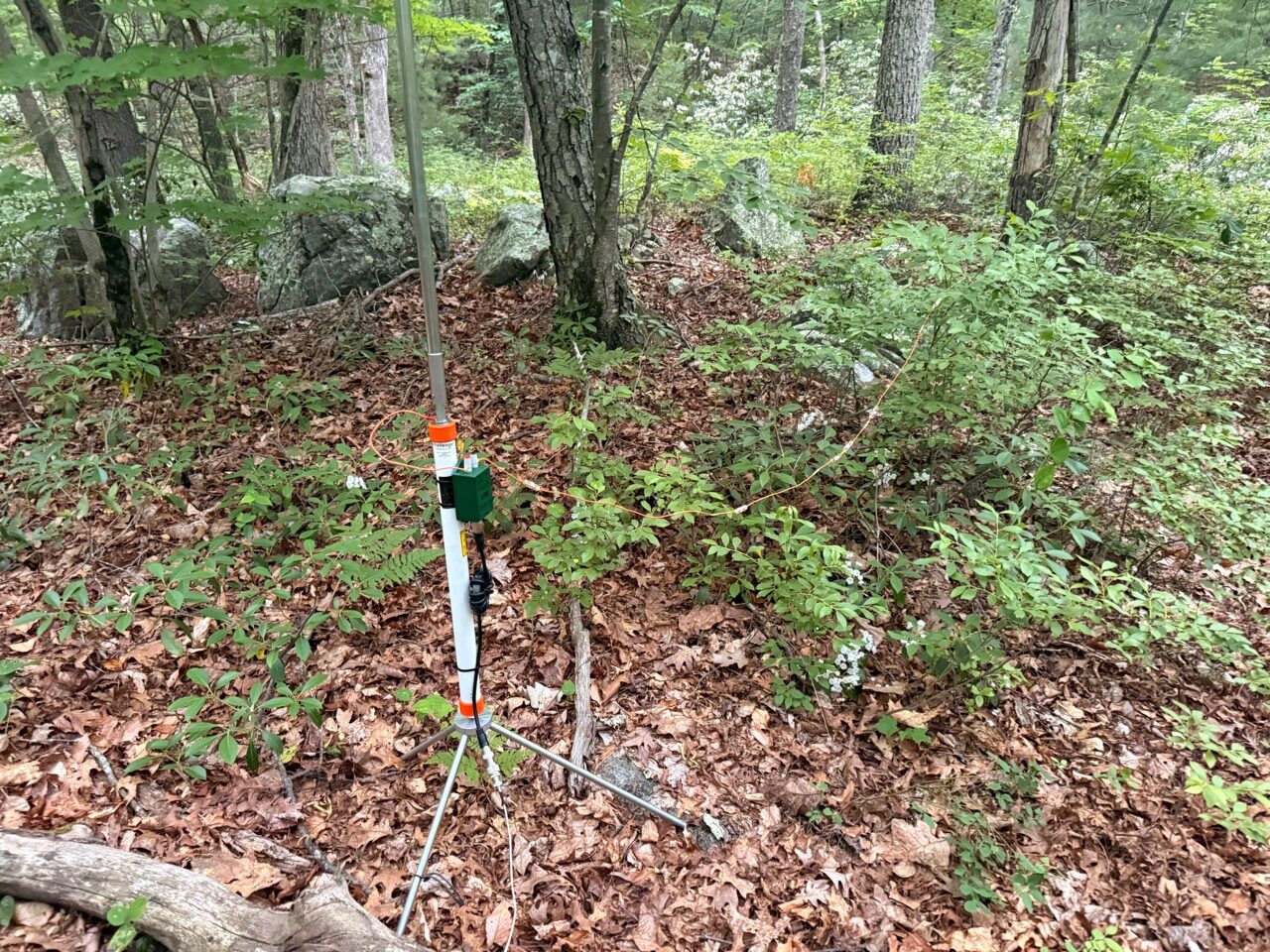
Once I was finally on the air, the first stretch was slow. I was using the KX2 at 10 watts for this one instead of my more typical 5 watts, though I did make one contact at 5 watts. Around grayline the station seemed to start getting out much better, and the pace improved. The best surprise was getting AL7KC in North Pole, Alaska at 23:50 UTC. That is a long way from Rhode Island for 10 watts and a wire in the woods, and it was easily the contact I was happiest to see in the log.
The awkward part was the UTC date rollover. I had six contacts before 00:00 UTC, which was 8 p.m. local, and then had to start the POTA count over on the next UTC day. The full log ended up at 18 CW QSOs on 20 meters: six on June 14 UTC and twelve on June 15 UTC. That means the pre-rollover park-day will show as a failed activation, while the post-rollover segment is the one that counts.
Even with the date split, this was a good trip. The trail was quiet, I did not see anybody else while I was operating, and the Rhode Island-side walk-in made the activation feel aligned with the larger project. The station worked, the Challenger did its job once I had all the pieces, and the late-evening timing turned into a useful reminder to watch the UTC clock before starting close to 8 p.m. local.
What worked
- Walking in from the Massachusetts-side parking area made the activation fit the Rhode Island goal without creating any boundary doubt.
- The KJ6ER Challenger on the tripod was the right no-stakes setup for a national park site.
- Running the KX2 at 10 watts seemed to help once grayline got closer.
- Alaska on 20 meters with 10 watts was a good reminder not to over-assume what a small field station can do.
- The Zippy paddle by K8CES worked well with the KX2 for this CW activation.
To adjust next time
- Check the complete antenna parts kit after moving gear between bags, especially the short-end pigtails for the off-center-fed dipole.
- Treat any activation starting near 8 p.m. local as a UTC-rollover problem before calling CQ.
- For the Rhode Island parks project, keep verifying whether the operating position is actually inside Rhode Island, not just inside the POTA reference.