Note
2026-06-04 Sachuest Point
A breezy Pack Mule activation at US-0516 with the KX2, the KJ6ER Challenger, and 38 quick CW QSOs from the rocks at Sachuest Point.
Unfamiliar with some of these terms?
POTA — Parks on the Air — an amateur radio program where licensed operators make contacts from designated public lands (national parks, state parks, wildlife refuges, and similar areas). Each location has a reference number. To activate a park, you log at least 10 contacts from within its boundaries. Hunters are operators who contact activators from home.
Pack Mule — A POTA News & Reviews activator award for portable stations carried away from the vehicle by hiking, cycling, paddling, or another non-motorized approach. A qualifying activation needs at least 22 QSOs, and the full award requires 100 qualifying activations.
Contact map
N1RWJ at US-0516
Sachuest Point National Wildlife Refuge - 38 QSOs - June 4, 2026
38 QSOs
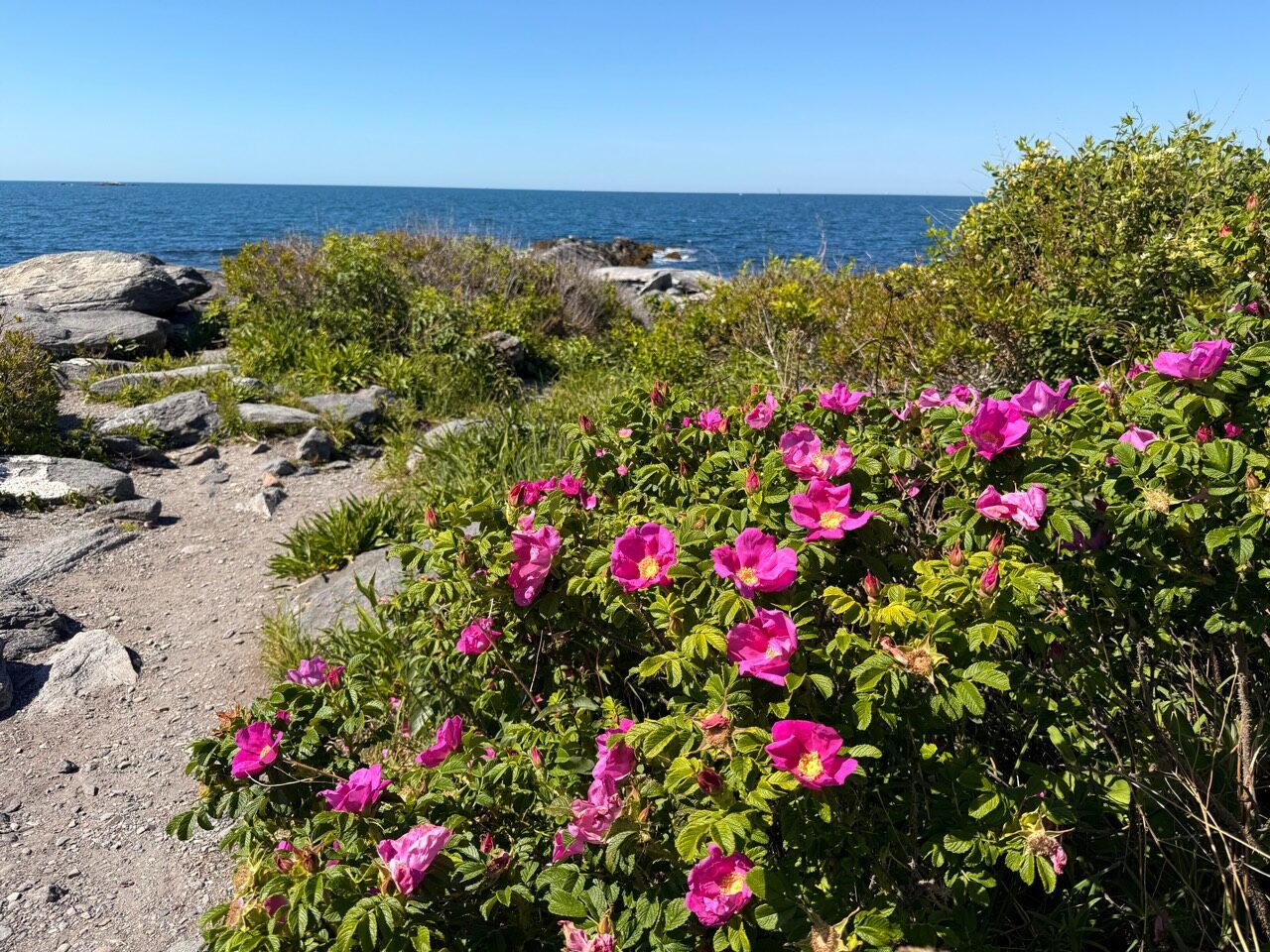
Sachuest Point National Wildlife Refuge, US-0516, was a good fit for a compressed morning. I had to be on Aquidneck Island anyway to pick up baked goods for my son’s high school graduation, and I had about an hour and a half while the order was being finished. I hiked a little over half a mile each way into the refuge, out to Sachuest Point itself, which also made the activation qualify for Pack Mule. It was a beautiful morning: mid-60s when I arrived, mid-70s by the time I left, bright morning light, and a steady breeze coming in off the water.
At a glance
- Where: Sachuest Point National Wildlife Refuge, US-0516, Aquidneck Island
- When: June 4, 2026, 14:16 to 15:23 UTC
- Activation: Pack Mule; 38 CW QSOs on 20 meters
- Radio: Elecraft KX2 with the internal battery
- Antenna: KJ6ER Challenger 25-foot whip on the REZ Antenna Systems mini tripod
- Power: 5 watts from the KX2 internal battery, about 0.4 Ah used
- CW gear: KXPD2 paddle/keyer, headphones
Field notes
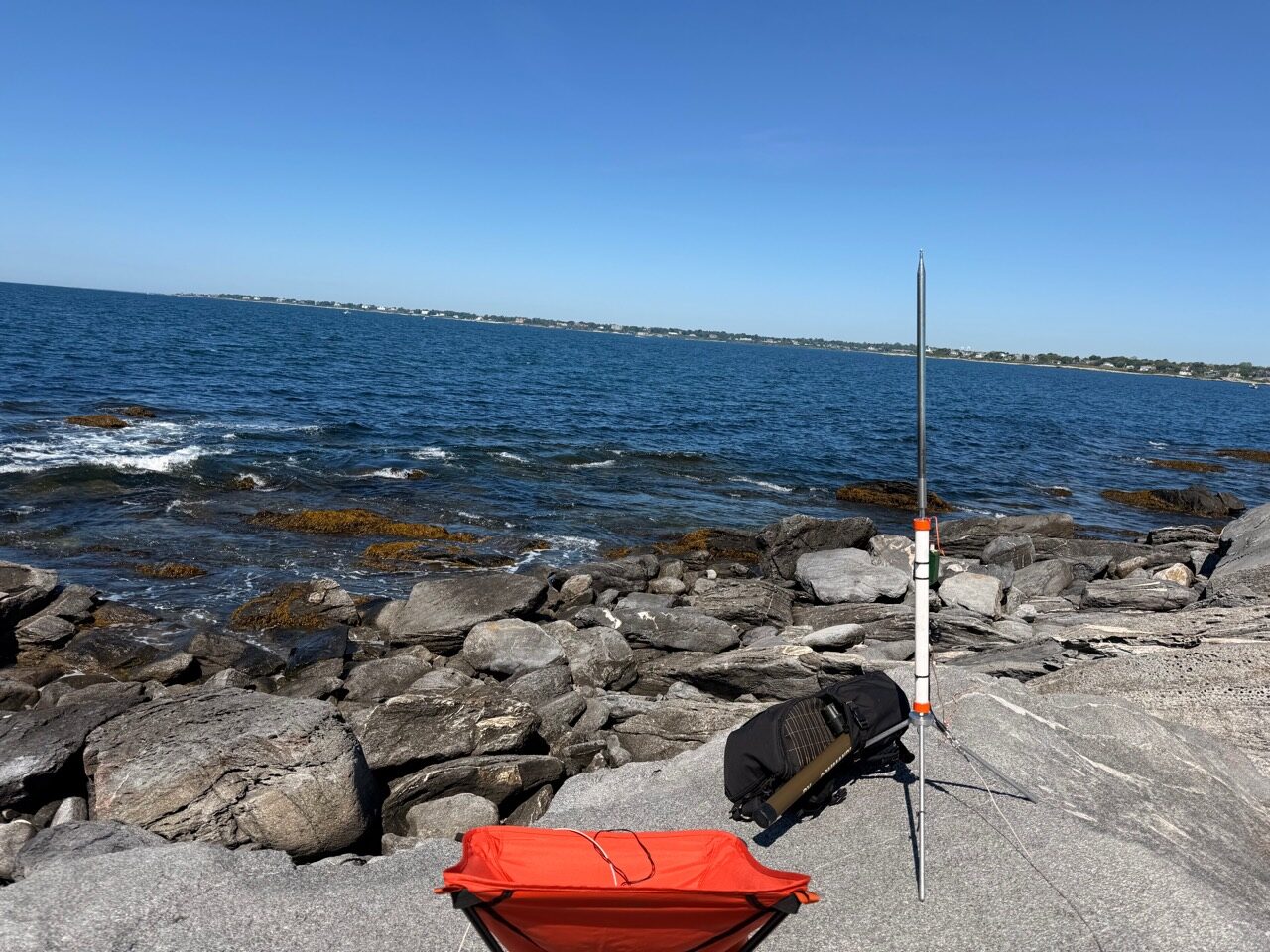
Sachuest Point National Wildlife Refuge, US-0516, has stricter setup rules than a typical park. No stakes in the ground, and no wires in trees. The Challenger is a great antenna and I use it often, but this site changed the base rather than the antenna: instead of staking it into the ground, I screwed the KJ6ER Challenger into the small REZ tripod and kept the whole station no-impact.
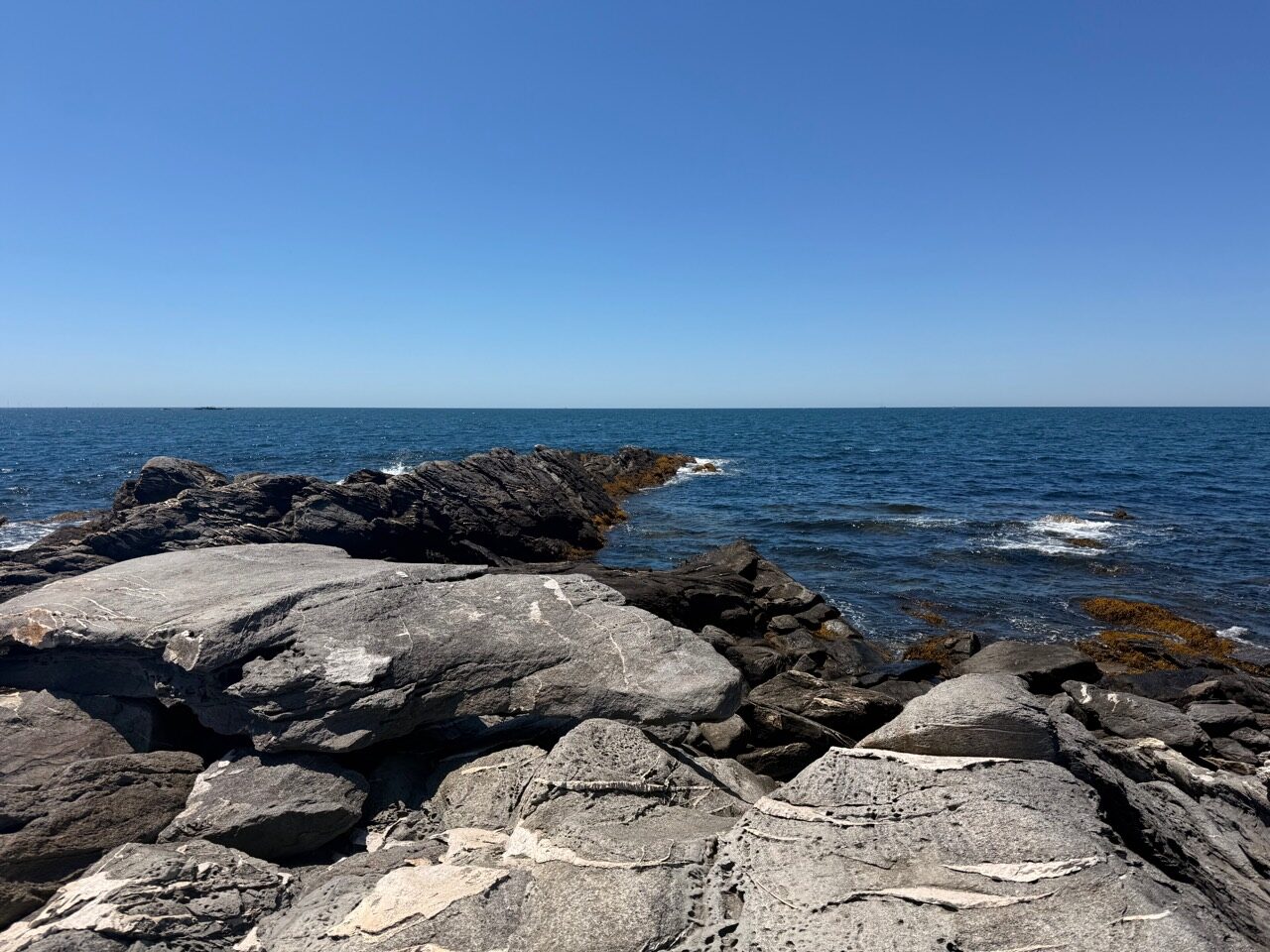
I kept walking until I was out near the point, then stepped onto the big rocks along the shoreline and found one large, flat slab that worked like a natural operating platform. The chair, radio, tripod, and antenna all fit on the rock, and the open water made the site feel much more exposed than a typical inland park.
The only real mechanical concern was the wind. The operating spot was right on the water, and the breeze was steady enough that I did not want to trust the tripod on its own. Once the bag was unpacked, I set it over the tripod leg that was pointed into the wind. The bag probably weighs around 30 pounds fully loaded, and even after unpacking it still had at least 20 pounds of gear in it. Being a habitual over-packer helped for once. That worked perfectly for this site because the ocean breeze had one clear direction. I would not count on the same trick in swirling wind, but for a coastal morning like this it was simple and effective.
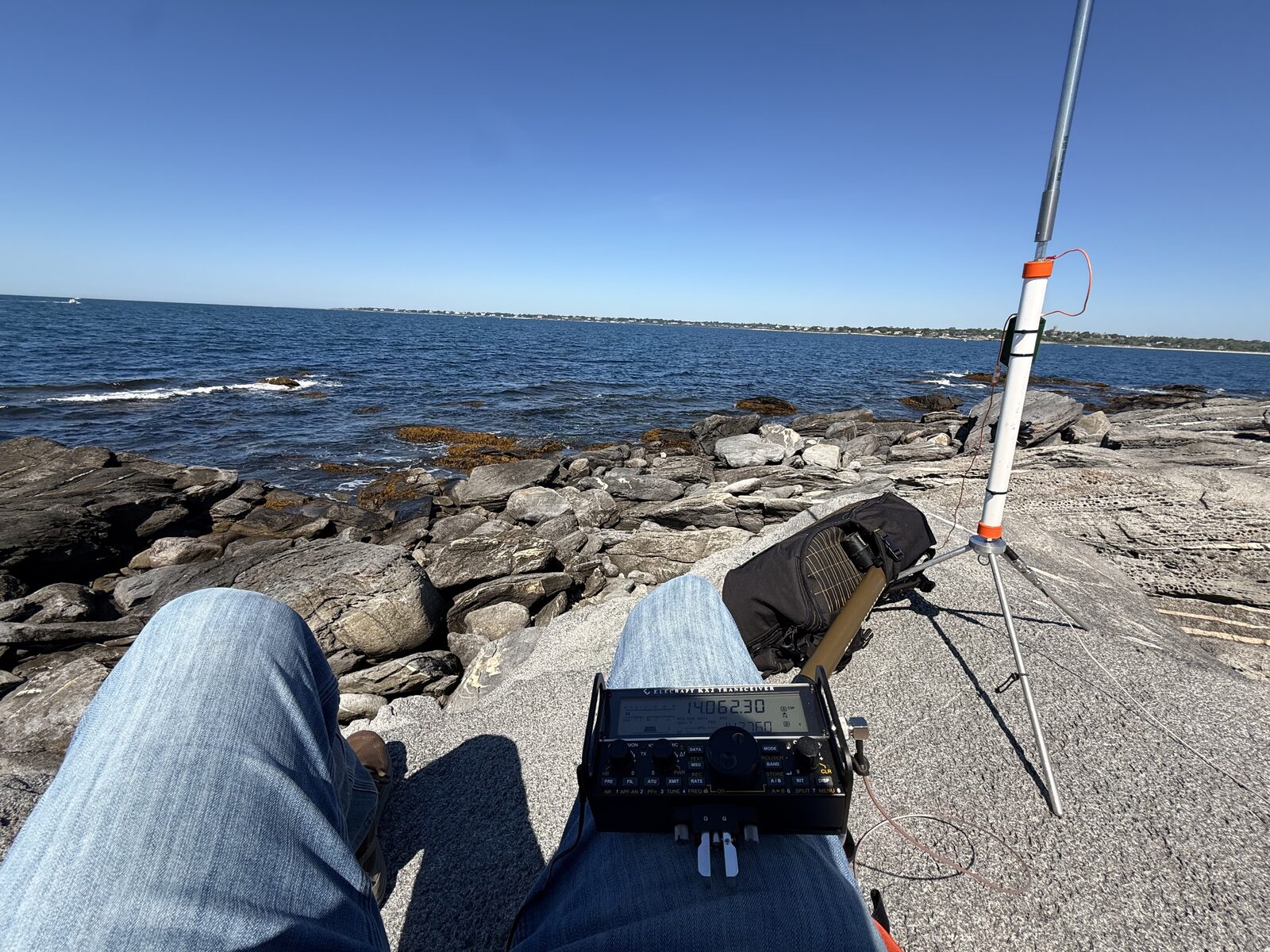
I used the KX2 on its internal battery with the KXPD2 paddle and headphones. The radio was balanced on my leg for the whole run, which worked, but it was the finicky part of the operating position. Every time I shifted I was aware that the KX2 could slide or tip if I was not careful. The headphones were not optional at that spot. The wind and surf were part of what made the morning so good, but they would have made weak CW much harder to copy through the KX2 speaker alone.
Once I found a place on 20 meters, the contacts came fast. I had only planned for about an hour, and the log filled almost continuously: 38 QSOs from 14:16:49 to 15:23:33 UTC. It felt like the fastest sustained CW run I have had so far. There were a few CQs in the middle, but nothing like the long CQ-repeat stretches from the previous day. This was mostly one caller after another until I had to stop and pack up.
The battery use was interesting too. The previous day’s two-hour activation used about 1.4 Ah. This one used only about 0.4 Ah in roughly an hour. Some of that is just the shorter operating time, but the pace also meant I was listening more and repeatedly calling CQ much less.
CW copy felt better than it has on some recent activations. I still needed repeats, especially when a few stations came back at once, but I was able to pull one or two letters out of the pileups and build from there. I also copied several callsigns cleanly on the first pass.
It was great to get a few friends in the log this morning also. Today I got some friends from Discord N8JMS and KF8CNK, along with N1BS (a local Rhode Island ham who has been helping me get into RI POTA and CW generally). It is always fun to get people I know in the log. Conor, KF8CNK, has been camping in another POTA park in Michigan with limited cell service, it was great to get him for a park-to-park.
One small CW detail still makes me grin: when folks send me the proper roger with that elongated dah in the R, it sounds fantastic. I cannot really send it from paddles without switching into a bug-style mode, but hearing it makes me want to spend more time with a straight key, bug, or cootie key. Thanks for the proper roger N8JMS!
What worked
- The Challenger on the mini tripod gave me a no-stakes, no-tree setup that fit the refuge rules.
- The half-mile-plus hike each way and 38 QSOs made this a Pack Mule activation.
- The flat shoreline rock made a stable natural platform for the chair, radio, and antenna.
- Anchoring the windward tripod leg with the gear bag was enough for the steady coastal breeze.
- Headphones were the right choice with wind and surf noise at the operating spot.
- 20 meters produced a nearly continuous CW run for the full hour available.
To adjust next time
- Do not assume the bag-on-tripod-leg trick will work unless the wind has one stable direction.
- Keep the tripod base option handy for other no-stakes or no-tree sites.
- Find a kneeboard or leg strap so the KX2 is not just balanced on my leg.
- Keep practicing pileup copy; pulling partial calls out of the noise is starting to feel more repeatable.