Note
East Bay Three-Park POTA Rove
Three Rhode Island parks with the KX2: 43 CW QSOs, contest congestion at the first stop, a preventable SWR problem at the second, and a fast saltwater finish at sunset.
Unfamiliar with some of these terms?
POTA — Parks on the Air — an amateur radio program where licensed operators make contacts from designated public lands (national parks, state parks, wildlife refuges, and similar areas). Each location has a reference number. To activate a park, you log at least 10 contacts from within its boundaries. Hunters are operators who contact activators from home.
Rove — A single outing that activates multiple parks in sequence. Set up, make the required contacts, pack down, drive to the next park, repeat.
Contact map
N1RWJ East Bay Rove
US-6986 / US-10546 / US-8293 - 43 QSOs - May 30, 2026
43 QSOs
This was a three-park evening rove through the East Bay side of Rhode Island: US-6986, US-10546, and US-8293. The first stop was crowded by the CQ WPX CW contest, the second turned into an SWR debugging session, and the last made up for both of them with a fast 20-meter run right on the water at sunset. I finished the rove with 43 CW QSOs: 14 at Simmons Mill, 14 at Eight Rod Farm, and 15 at Sapowet Marsh. See my separate writeup about the CQ WPX CW contest.
At a glance
- Where: Simmons Mill Wildlife Management Area, Eight Rod Farm Wildlife Management Area, and Sapowet Marsh State Wildlife Area in Rhode Island
- When: May 30, 2026; rove start logged at 19:51 UTC, move to Eight Rod Farm at 21:14 UTC, move to Sapowet Marsh at 23:36 UTC
- Activation: 43 CW QSOs total at 5 watts with the KX2; 14 at Simmons Mill, 14 at Eight Rod Farm, and 15 at Sapowet Marsh
- Radio: Elecraft KX2
- CW gear: N3ZN ZN-Lite II paddle on a magnetic base
Simmons Mill Wildlife Management Area, US-6986
I started at Simmons Mill with the KX2, 5 watts, and the Challenger 20-meter off-center-fed dipole. This was still early enough in the evening that the CQ WPX CW contest was filling a lot of the band, so the first problem was simply finding a place to operate POTA at a speed I could manage. I did not want to mix a POTA activation with contest-speed copying.
Once I found a spot, it came together, just not quickly. I got a burst of contacts early and then had to work through longer gaps before the activation was finished. I ended up with 14 CW QSOs between 19:51 and 21:06 UTC. I was using the new paddle on its magnetic base, but I had forgotten to grab the leg strap out of the bag, so I was basically hand-holding the paddle while keying with my right hand.
This one feels like the baseline stop for the whole rove: perfectly workable, but with enough friction from the contest and the improvised keying setup that I was already thinking about what to clean up at the next park.
Eight Rod Farm Wildlife Management Area, US-10546
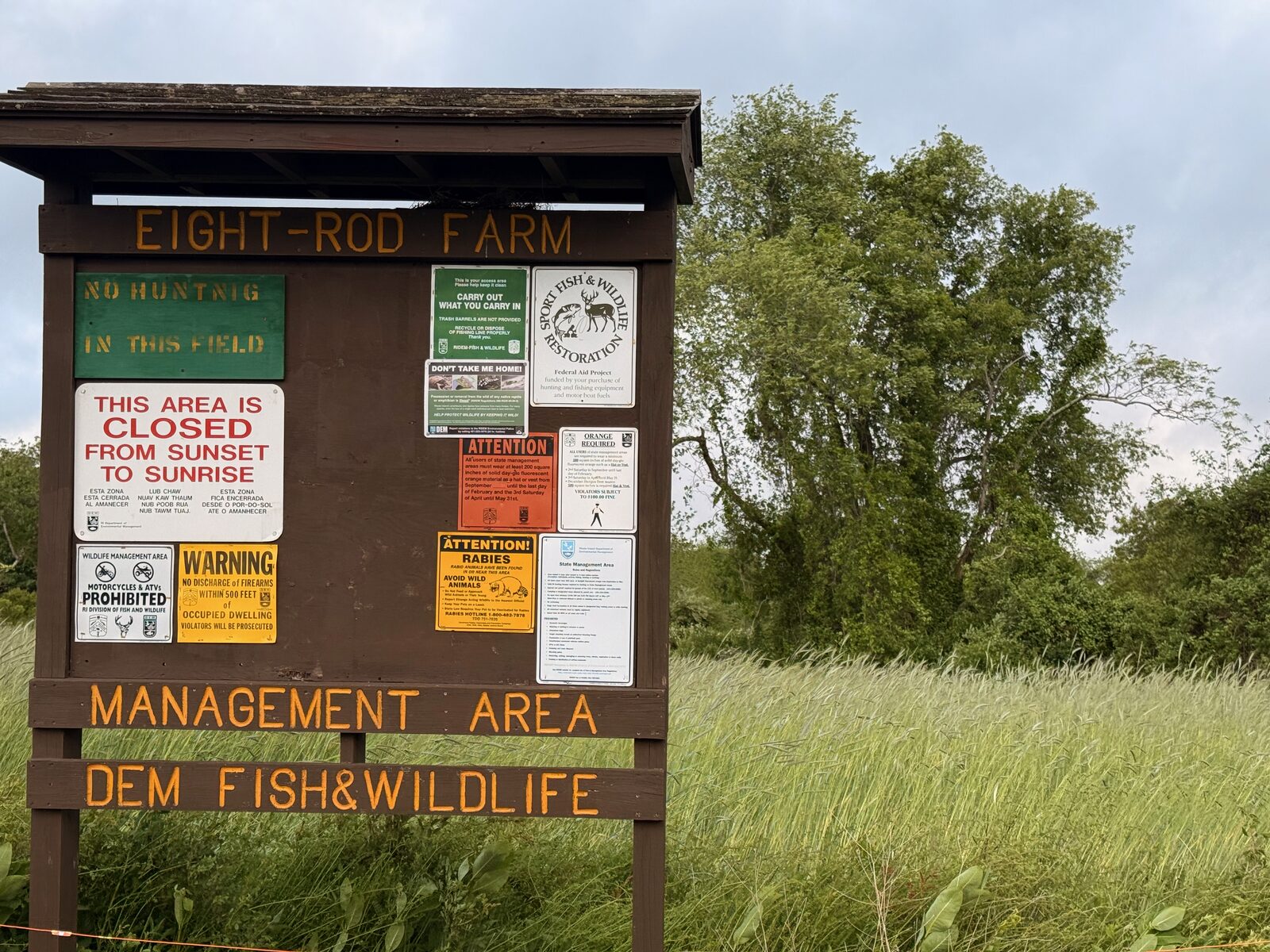
Eight Rod Farm was the frustrating one. I reached that stop a little after 21:14 UTC and stayed there until the move to Sapowet Marsh at 23:36 UTC, which already tells the story: a lot of that window went into setup and troubleshooting rather than operating.
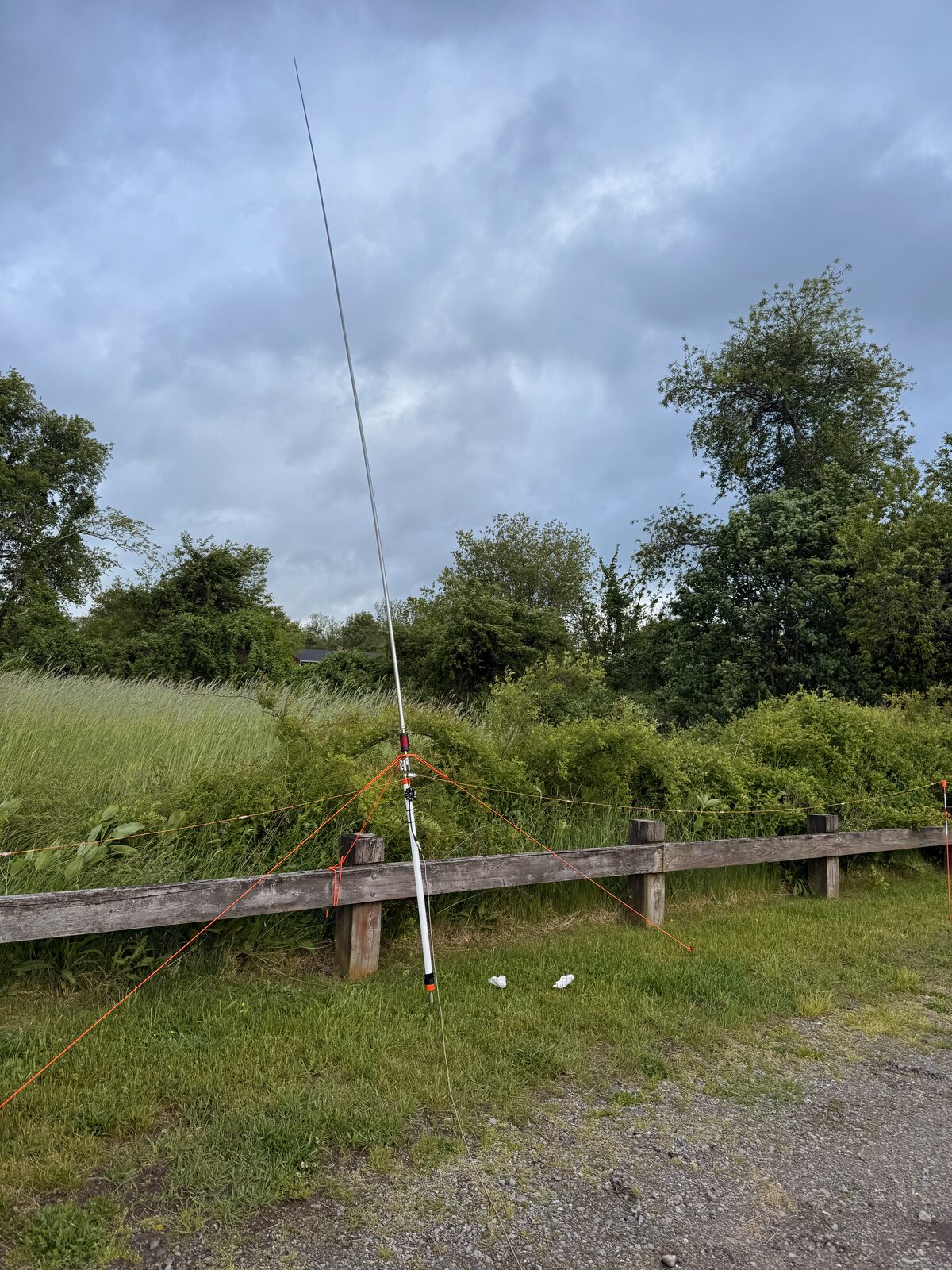
I started with a vertical setup built around the REZ 17-foot whip and a loading coil for 40 meters, but the actual antenna was the POTA Performer by KJ6ER with the 40-meter extension radials. That is why I needed the 40-meter coil in the first place. I made one or two contacts while trying 40 and maybe 30 meters, but the SWR was wildly wrong for a setup that should have been resonant. After chasing that for a while, I found the actual problem: a loose coupler at the connection between the choke and the whip assembly. Once I tightened that up, the SWR dropped to essentially 1:1 and the antenna behaved normally.
At the same time, band conditions were getting worse. The K-index had climbed from 1 earlier in the outing to 5 by then, with a more negative Bz and higher solar wind. So this stop turned into a combination of self-inflicted hardware trouble and genuinely degrading propagation.
The good change here was ergonomic rather than electrical. When I reworked the antenna and shifted to 20 meters, I also took the time to get the leg strap out for the paddle’s magnetic base. I had been keying left-handed at Eight Rod, hand- holding the paddle for the first part of the stop. Once I put the magnetic base on the leg strap, it was much better. I finished with 14 CW QSOs from 21:59 to 23:15 UTC, with contacts on 40, 30, and 20 meters.
This was also the first time the KX2’s internal battery made me pay attention. I expected it to be full enough for the outing, but I do not think I had actually charged it long enough before taking it out the first time. It threw a low-battery warning, so I plugged in the 3 Ah pack and kept going. It never died, and it was not really a problem in the field, but it is a reminder that “probably charged” is not the same thing as charged.
Sapowet Marsh State Wildlife Area, US-8293
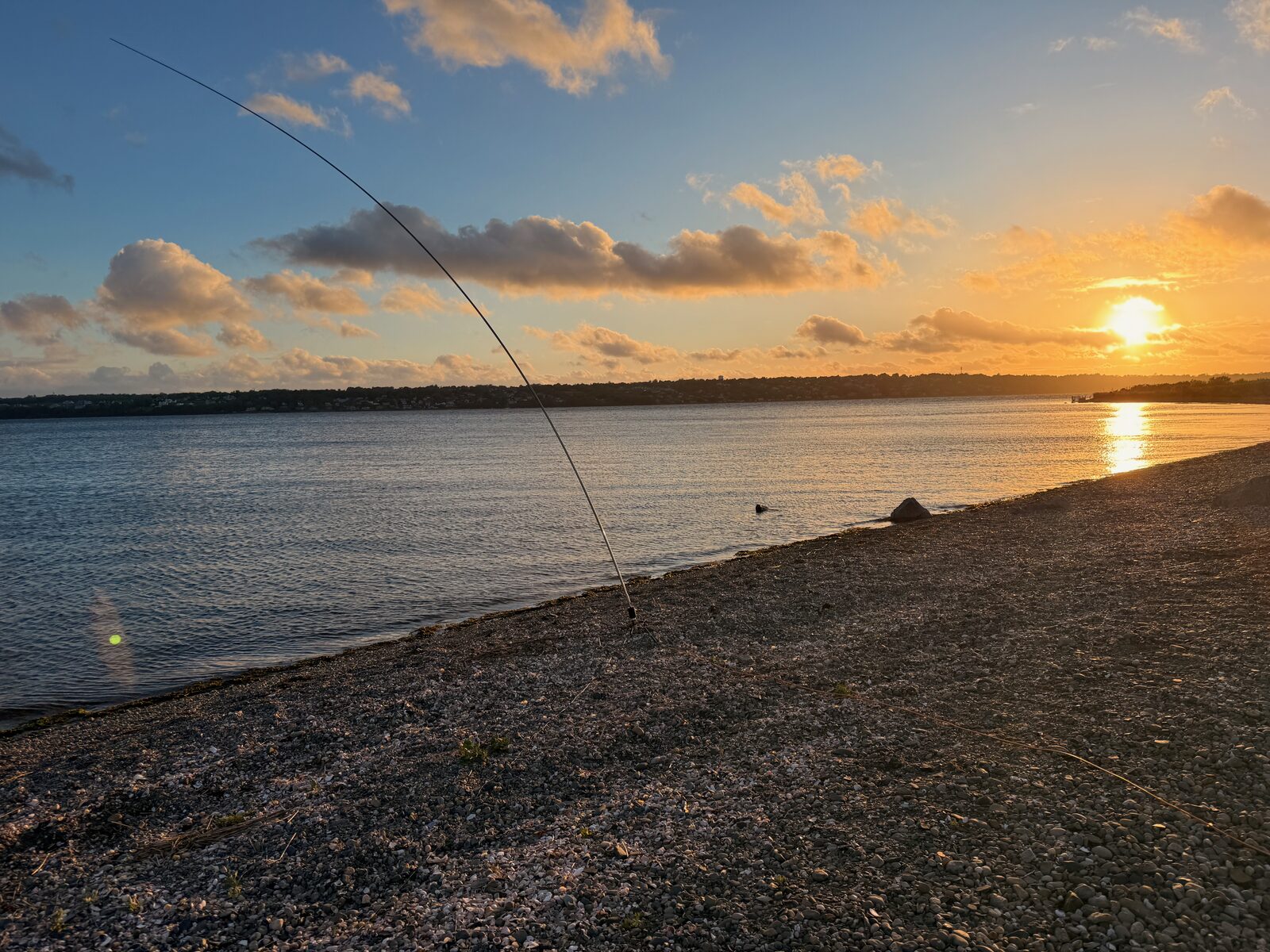
Sapowet Marsh was the payoff. I switched there at 23:36 UTC and set up right at the shoreline on the inlet from the ocean into Mount Hope Bay. This one used the REZ Rybakov-style setup: 25-foot whip, 4:1 transformer, and four 33-foot radials. The radials were basically touching the water.
I got the station ready about ten minutes before the UTC day rollover and then waited to start calling CQ until after 00:00 UTC on May 31. I did not want to scatter a few pre-midnight contacts into a separate park-day log and then have to start over. Once the clock rolled over and I called CQ, though, the whole thing lit up immediately.
This was the most satisfying operating of the day. The logging app estimated that I was running at roughly 44 QSOs per hour over the first stretch, which matches how it felt: nearly a contact a minute, small pileups, and much better control than I remember having in similar moments before. I was keying with my right hand again here, with the paddle base moved to the right side, and I was noticeably more comfortable and more accurate.
One of the fun moments was hearing a call that sounded like it ended in X and
thinking it might be Rory, W8KNX. It was, and he
was loud from Michigan. The broader pattern was even better: contacts from
California, Nevada, Michigan, Illinois, and Florida, all at 5 watts. Being
right on the saltwater almost certainly helped.
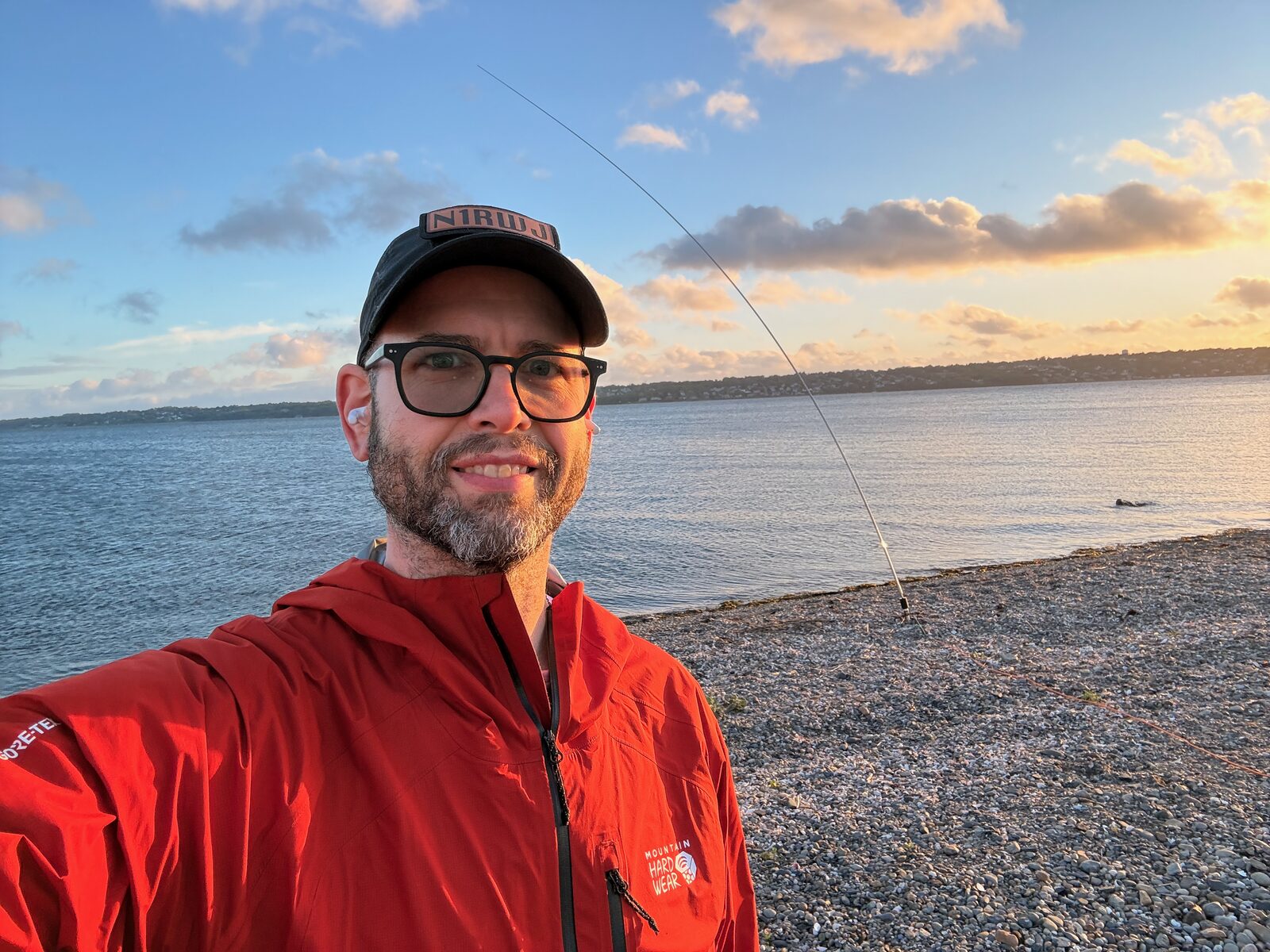
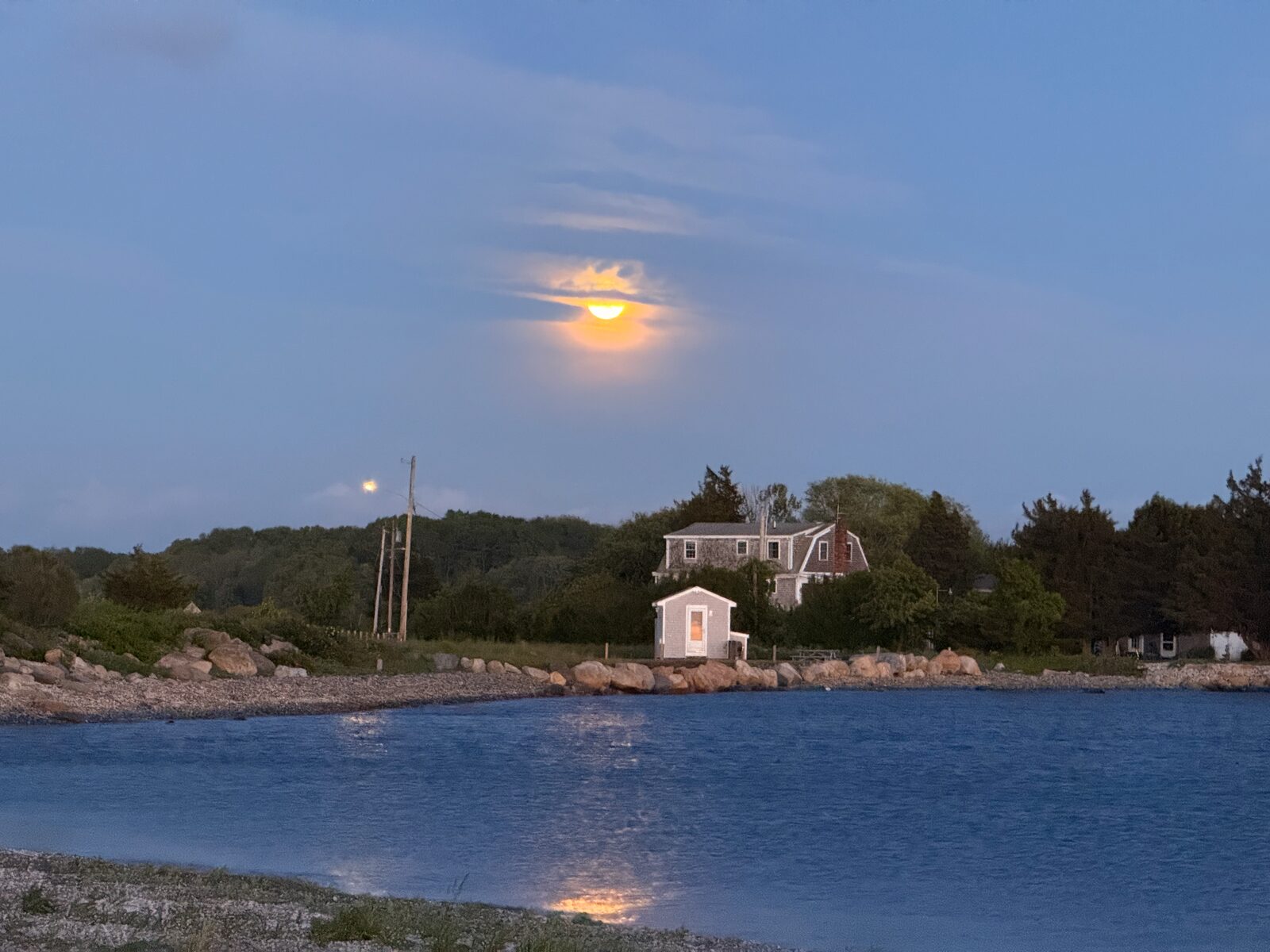
The full log ended with 15 CW QSOs from 00:06 to 00:29 UTC on May 31.
What worked
- The KX2 kept the whole rove simple. One radio, 5 watts, CW only, and no separate power-system drama.
- The new N3ZN ZN-Lite II paddle worked well once I actually used the leg strap with the magnetic base.
- Waiting for the UTC rollover at Sapowet Marsh was the right call. The log stayed clean and the run came together immediately afterward.
- The shoreline Rybakov setup at Sapowet Marsh was exactly the right antenna for that location.
To adjust next time
- Pack the paddle leg strap where I cannot forget it. That was avoidable friction at the first stop.
- Double-check every threaded antenna connection before I start chasing propagation or tuning problems.
- When a rove depends on a late third stop, I should assume less operating time than the clock suggests. The second-stop troubleshooting ate a lot of margin.